

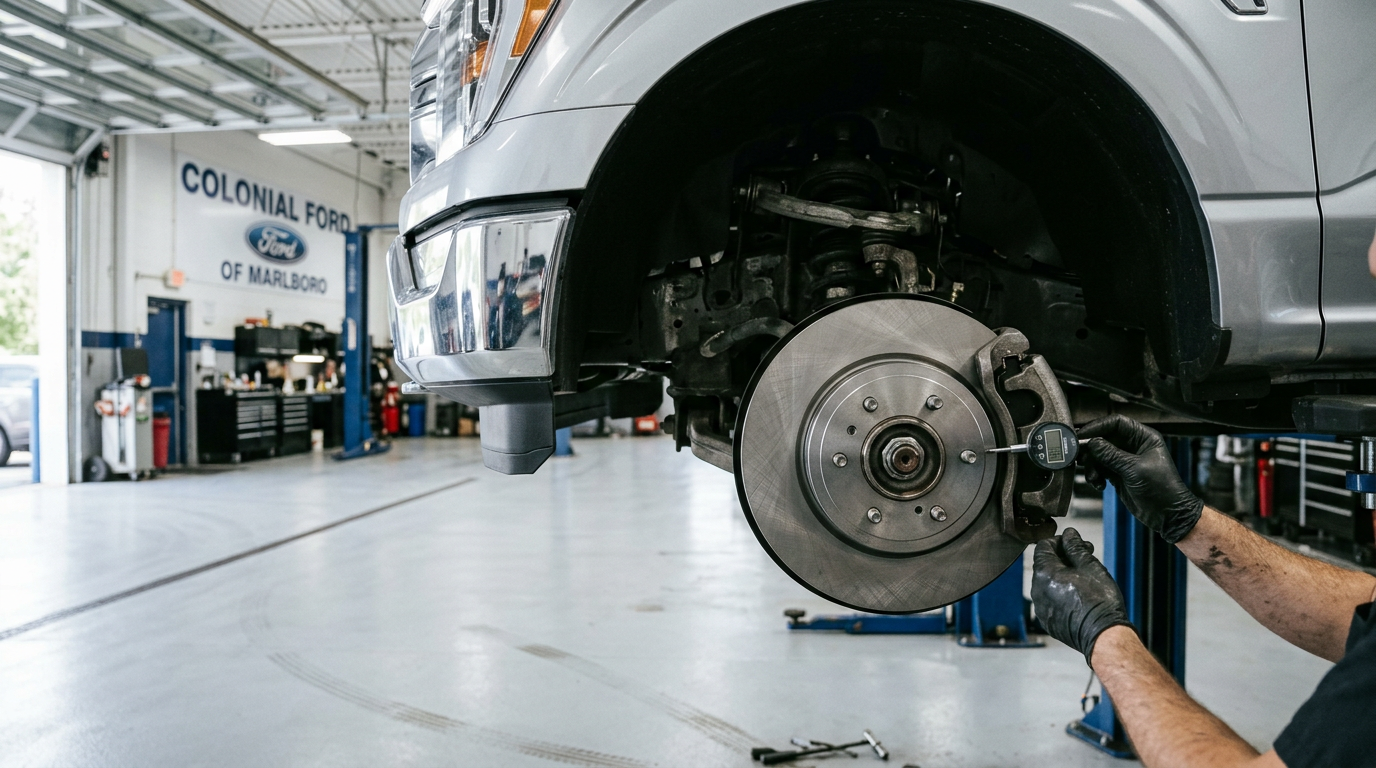
Original equipment Motorcraft ceramic or semi-metallic friction pads paired with Motorcraft high-carbon vented iron rotors provide the optimal combination of stopping distance, heat dissipation, and service life for the Ford F-150. Heavy-towing configurations carrying high loads perform best with semi-metallic pads engineered for elevated thermal resistance, whereas daily highway commuting benefits from low-dust ceramic formulations.
Selecting friction components for a full-size pickup requires matching the pad compound to the truck's operational demands. The Ford F-150 relies on four-wheel anti-lock vented disc brakes to manage severe deceleration forces, whether powered by the 2.7L EcoBoost V6, 5.0L V8, or 3.5L EcoBoost V6. When configured with a Select Shift 10-speed automatic transmission and an EPA-rated 17 city / 23 hwy fuel economy profile, an F-150 rated to haul heavy payloads or tow up to 10,400 lbs generates substantial kinetic energy that must convert into thermal energy at the wheel ends.
Motorcraft brake pads are engineered specifically to match the caliper hydraulic ratios and rotor metallurgy of the F-150. Ceramic friction linings offer quiet engagement and low dusting, making them suitable for standard daily driving and light trailering. In contrast, semi-metallic linings contain metallic fibers that transfer heat away from the friction interface more rapidly during repeated high-speed stops or continuous mountain descents. Pairing these pads with OEM vented disc rotors prevents thermal warping, friction fade, and premature wear.
Maintaining your vehicle's factory stopping performance requires regular professional evaluation. Drivers seeking certified inspection can reach our service advisors by placing a quick call to discuss component recommendations, or navigate directly to our Marlborough service center for an in-person brake evaluation.
Table of Contents
- What Is the Minimum Safe Thickness and Warning Signs for Ford F-150 Brakes?
- What Are the Front and Rear Brake Rotor Dimensions on the Ford F-150?
- How Does Regenerative Braking Work on the Ford F-150 PowerBoost Hybrid and Lightning?
- Where Can You Get Ford F-150 Brake Service and Mobile Care Near Framingham?
- Common Questions About Ford F-150 Brake Maintenance and Costs
- Keep Your Ford F-150 Stopping Safely at Colonial Ford of Marlboro
What Is the Minimum Safe Thickness and Warning Signs for Ford F-150 Brakes?
The absolute minimum safe friction material thickness for Ford F-150 brake pads is 3 mm (approximately 1/8 inch), and any pad worn to or below this point requires immediate replacement to prevent total friction loss and rotor surface destruction. Brand-new replacement pads typically feature approximately 12 mm of usable friction material lining.
Monitoring brake wear before reaching the critical 3 mm threshold prevents costly damage to surrounding mechanical components. Modern brake pads include built-in mechanical wear indicators—small metallic tabs designed to contact the rotating rotor when the lining reaches approximately 3 mm. This contact creates a high-pitched squealing or chirping noise during pedal application, serving as an early audible alert long before metal-to-metal grinding occurs.
Recognizing the physical and mechanical symptoms of worn braking components ensures timely maintenance:
- Squealing or squeaking noises during light pedal pressure, indicating pad wear tabs reaching rotor contact.
- Harsh grinding or scraping sounds, signaling complete pad depletion where metal backing plates grind directly against the rotor face.
- Steering wheel pulsation or brake pedal vibration, caused by lateral runout or uneven rotor thickness variation from excessive heat.
- Spongy or sunken brake pedal feel, indicating trapped air, degraded fluid, or severely worn pad material requiring excess caliper piston extension.
- Vehicle pulling to one side under braking, caused by uneven pad wear, a sticking caliper slider pin, or hydraulic pressure imbalance.
- Illuminated dashboard brake warning lights or electronic message center maintenance alerts.
Our service advisors frequently inspect trucks brought in after heavy weekend hauling, where owners first noticed high-pitched squealing under load. Fleet operators and individual truck owners should include brake friction measurements during routine 10,000-mile service intervals. Under normal operating conditions, pad life ranges from 30,000 to 70,000 miles, though aggressive city driving, heavy payload transport, and frequent trailering accelerate wear.
What Are the Front and Rear Brake Rotor Dimensions on the Ford F-150?
Standard Ford F-150 configurations utilize 13.8-inch vented front brake rotors combined with 13.2-inch solid or vented rear brake rotors. Specialized heavy-duty payload packages utilize enhanced rear rotor designs and heavy-duty caliper assemblies to manage elevated thermal expansion when operating at maximum gross vehicle weight ratings.
Front rotors carry up to 70 percent of total stopping force during hard deceleration due to forward weight transfer. The 13.8-inch front rotors incorporate internal cooling vanes positioned between the inner and outer friction plates. These vanes act as a centrifugal pump, drawing cooler air through the center of the rotor hub and pushing heat outward to prevent brake fade during demanding downhill descents.
Rear brake rotors complement the front braking system by maintaining vehicle stability and supporting driver-assist tech like Curve Control. The 13.2-inch rear rotors provide consistent torque application across the rear axle, preventing lockup while supporting load distribution. Every rotor features a minimum discard thickness spec stamped directly into the metal casting hat; once a rotor wears below this dimensional tolerance through normal friction loss or resurfacing machining, replacement is mandatory to maintain structural integrity.
How Does Regenerative Braking Work on the Ford F-150 PowerBoost Hybrid and Lightning?
Regenerative braking on the Ford F-150 PowerBoost Hybrid utilizes the vehicle's electric drive motor as a generator during deceleration to capture kinetic energy, converting it into stored electrical energy for the high-voltage battery before traditional hydraulic disc brakes engage.
When the driver eases off the accelerator or lightly depresses the brake pedal, the hybrid control module reverses the electromagnetic flow within the electric motor. This process creates mechanical resistance against the driveshaft, slowing the truck while routing recovered electricity back into the battery pack. During light to moderate braking, regenerative retardation handles the majority of deceleration without using the mechanical friction pads.
As pedal pressure increases or during emergency stops, the electronic brake booster seamlessly blends regenerative deceleration with conventional hydraulic pressure. The system engages the four-wheel disc brake calipers to squeeze the friction pads against the rotors, delivering maximum combined stopping force. Because regenerative braking handles initial deceleration during daily routine suburban commutes through Framingham, high-voltage hybrid trucks often experience significantly lower friction pad wear and longer service intervals than purely gas-powered configurations.
Where Can You Get Ford F-150 Brake Service and Mobile Care Near Framingham?
Certified Ford F-150 brake maintenance, including multi-point friction inspections, pad replacements, rotor resurfacing, and complete hydraulic fluid flushes, is available at our dedicated Marlborough service center, with mobile maintenance options available directly at your home or workplace for qualifying routine services.
Living in New England presents unique challenges for truck braking hardware. Winter road salt and moisture accelerate oxidation on steel caliper pins, anti-rattle clips, and rotor hat surfaces. Routine maintenance in our service bays includes thoroughly cleaning caliper slide channels, applying high-temperature synthetic lubricant to hardware pivot points, and verifying piston seal integrity to protect against salt-belt corrosion. Drivers coming from nearby Stow for farm work or trailering can rely on factory-trained technicians using genuine OEM components.
To make routine upkeep convenient, local drivers can manage maintenance through these dedicated service steps:
- Review current regional maintenance offers by checking our service and parts specials.
- Reserve a service appointment online by selecting your preferred time through our online service scheduling tool.
- Request Ford Mobile Service availability when booking to have certified technicians complete eligible maintenance at your residential driveway or business parking lot.
Common Questions About Ford F-150 Brake Maintenance and Costs
Q: How long does a standard Ford F-150 brake service appointment take?
A standard front or rear brake pad replacement on an F-150 typically takes between 1 and 1.5 hours in our service center. If your truck requires pad replacement alongside front and rear rotor replacement and a hydraulic fluid exchange, the complete procedure generally takes 2 to 3 hours to complete thoroughly.
Q: How often should Ford F-150 brake fluid be flushed?
Ford recommends inspecting and testing brake fluid condition regularly, with a complete system fluid flush performed every 3 years regardless of mileage. Brake fluid is hygroscopic, meaning it absorbs moisture over time from humid ambient air. Water contamination lowers the boiling point of the fluid, which can cause internal pedal squishiness, rust inside caliper pistons, and reduced stopping force under high temperatures.
Q: Can worn rear brake pads trigger electronic parking brake errors on the F-150?
Severely worn rear brake pads force the electric parking brake actuator motors to travel further to clamp the rotor face. When pad material drops below minimum tolerances, the extended actuator stroke can trigger warning messages or electronic parking brake fault codes on the instrument cluster. Replacing worn friction material restores proper actuator travel distance.
Q: Why do winter road conditions cause early brake squeal on trucks in New England?
Winter road salt, de-icing chemicals, and road grit settle onto the exposed surface of brake rotors and inside caliper pad slides. This buildup prevents the friction pad from retracting cleanly away from the rotor when you release the brake pedal, leading to light surface rust, uneven pad contact, and squealing noises until the assembly is cleaned and serviced.
Q: Do aftermarket brake pads void the Ford factory warranty?
Installing high-quality aftermarket friction pads does not void your vehicle's overall factory coverage under federal law. However, damage to rotors, calipers, or anti-lock sensors caused by incorrectly sized aftermarket parts, improper fitment, or excessively harsh friction materials will not be covered under warranty. Using genuine OEM components preserves full factory backing.
Keep Your Ford F-150 Stopping Safely at Colonial Ford of Marlboro
Maintaining reliable stopping power in your 2026 Ford F-150 truck in Marlborough requires regular inspection, timely friction pad replacement, and precision rotor care. From managing heavy payload trailering to navigating daily regional commutes, installing original Motorcraft components ensures your vehicle maintains factory-engineered braking safety standards.
Our certified technical team brings specialized knowledge, advanced diagnostic equipment, and factory parts to every maintenance service. To schedule your next brake inspection or component replacement, place a direct call to our service team or drop by our Marlboro facility location to keep your truck running safely year-round.
© 2026 Colonial Ford of Marlboro. All rights reserved.