

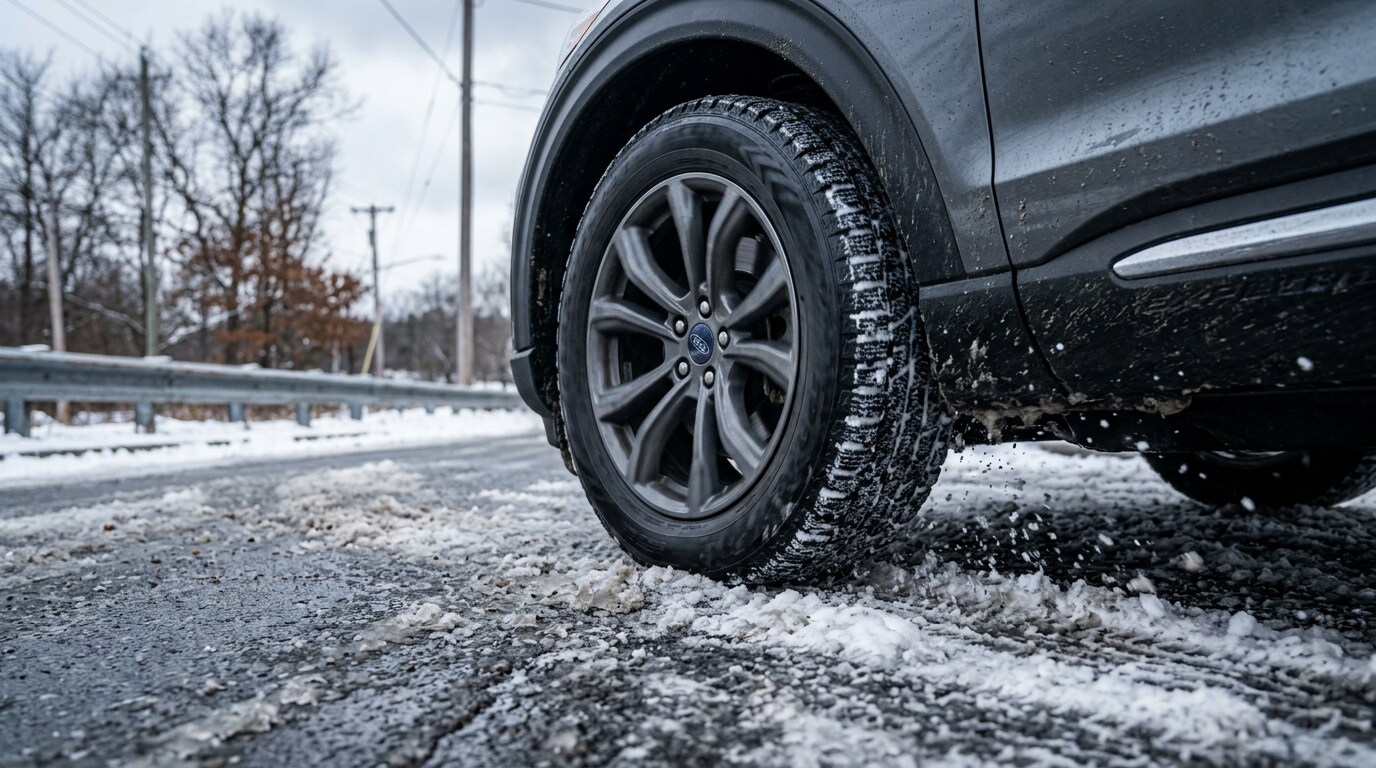
Dedicated winter tires and severe-snow-rated all-weather tires deliver the best winter traction for a Ford Explorer in Massachusetts by maintaining tread flexibility below 45 degrees Fahrenheit and biting into hard-packed snow. Premium options bearing the three-peak mountain snowflake symbol, such as the Michelin CrossClimate2 and specialized winter compounds, shorten emergency braking distances and maintain lateral stability on icy Massachusetts roadways where traditional touring tires lose grip.
Independent track evaluations and real-world snow testing reveal measurable traction gaps between top manufacturers. When comparing severe-weather designs from Michelin against traditional all-season rubber from Goodyear, the Michelin CrossClimate2 stops an average of four to eight feet shorter on packed snow than standard touring compounds. While Goodyear lines like the Assurance WeatherReady offer dependable wet-weather evacuation and competitive slush grip, Michelin designs consistently retain higher longitudinal bite during acceleration and panic stops on glazed surfaces.
Suburban commuting across Route 9 and around Cochituate State Park in Framingham frequently subjects vehicles to quick transitions between cleared highway asphalt, refrozen runoff, and wet slush. An all-wheel-drive Explorer manages forward momentum effectively through its terrain management system, but vehicle stability in an emergency stop relies entirely on the mechanical contact patch of your tires. Dedicated winter options provide maximum stopping assurance, while severe-weather-rated all-weather alternatives eliminate the chore of seasonal wheel swaps for busy drivers.
If you encounter unexpected winter tire damage, puncture hazards, or sudden pressure drops, manufacturer support is built into your ownership experience. New vehicles under limited warranty protection include complimentary roadside support through Ford Roadside Assistance: 1-800-241-3673. For complete winter tire inspection, mounting, and balancing in the MetroWest area, consult the factory-trained technicians at our service department. You can get step-by-step driving directions using our Marlborough location map or reach our service desk directly by calling (508) 460-8400 before your visit.
Table of Contents
- What Makes an All-Weather Tire Different From a Standard All-Season Tire?
- What Tire Sizes, Wheel Upgrades, and Speed Ratings Fit the Ford Explorer?
- What Is the Recommended Tire Pressure and Maintenance Schedule for a Ford Explorer?
- How Much Does Replacement Cost and What Fees Are Included in Tire Installation?
- Ford Explorer Tire Service: Answers on Fit, Pressure, and Installation
- Schedule Ford Explorer Tire Service at Colonial Ford of Marlboro
What Makes an All-Weather Tire Different From a Standard All-Season Tire?
An all-weather tire differs from a standard all-season tire by incorporating specialized rubber compounds and aggressive tread siping engineered to remain flexible in sub-freezing temperatures, earning the severe snow service Three-Peak Mountain Snowflake ( 3PMSF) certification. Standard all-season tires carry an M+S (Mud and Snow) rating based on tread void geometry, but their rubber hardens like hockey pucks below 45 degrees Fahrenheit, leading to significantly longer stopping distances on cold, dry pavement and snow.
The engineering distinction centers on three structural components:
- Thermal Compound Flexibility: All-weather tread formulas utilize higher concentrations of silica and specialized polymers that resist cold-weather hardening, maintaining surface contact across frozen asphalt.
- Deep 3D Siping: Hundreds of microscopic zig-zag grooves open under braking load, packing snow into the tread blocks to create snow-on-snow friction, which provides superior mechanical bite compared to rubber-on-ice contact.
- Directional Evacuation Grooves: Distinct V-shaped tread patterns sweep slush, melting salt brine, and standing water away from the center of the tire footprint to resist hydroplaning during heavy coastal storms.
Drivers navigating tree-lined secondary corridors and winding rural roads near the Assabet River in Stow face prolonged shade patches where morning frost and black ice linger well past sunrise. Standard all-season touring tires struggle to maintain lateral grip on these frozen surfaces. An all-weather tire provides the true four-season security required for severe New England cold snaps while retaining the wear resistance, quiet ride quality, and fuel efficiency required for hot summer driving.
What Tire Sizes, Wheel Upgrades, and Speed Ratings Fit the Ford Explorer?
Standard tire fitments on the modern Ford Explorer range from 18-inch wheels on entry models up to 21-inch sport assemblies on performance configurations, with each wheel diameter utilizing a specific aspect ratio to preserve an identical overall rolling circumference. The Explorer Active comes equipped with 255/65R18 tires, the ST-Line steps up to 255/55R20, the off-road-oriented Tremor utilizes rugged P265/65R18 rubber, and high-output configurations like the ST and Platinum roll on low-profile 275/45R21 fitments.
Because the total outer diameter remains uniform across all factory configurations, upgrading an 18-inch equipped Explorer to factory 21-inch wheels is mechanically straightforward. The vehicle's wheel wells, suspension clearances, and driveline accommodate the broader footprint cleanly. However, upgrading wheel diameters introduces practical tradeoffs:
- Ride Compliance: An 18-inch wheel features a tall 65-series sidewall that absorbs deep potholes and frost heaves effectively, whereas a 21-inch wheel uses a short 45-series sidewall that delivers sharper steering response at the expense of a firmer ride over broken pavement.
- Speed Ratings: Sport-tuned trims such as the Explorer ST demand W-rated or Y-rated tires certified for speeds up to 168 mph and 186 mph to match the vehicle's high-speed chassis calibration and 400-hp output. Standard passenger models generally require T-rated (118 mph) or H-rated (130 mph) tires.
- Load Index: Full-size family haulers carrying seven passengers or pulling up to 5,000 lbs of trailer weight require tires with an appropriate load index, typically 103 or higher, ensuring the sidewalls safely support gross vehicle weight ratings under full load.
Always check the tire information placard on the driver door jamb to confirm original-equipment sizing, load indices, and minimum speed rating thresholds before ordering new rubber.
What Is the Recommended Tire Pressure and Maintenance Schedule for a Ford Explorer?
Recommended cold tire inflation pressure for a Ford Explorer is between 33 PSI and 36 PSI, depending on the installed tire size, wheel specification, and gross passenger load rating indicated on the driver door jamb placard. Maintaining correct cold tire pressure ensures even tread contact across the footprint, stabilizes fuel efficiency, and prevents irregular outer shoulder or center tread wear patterns.
Ambient temperature drops in New England directly impact inflation levels. For every 10-degree drop in outside temperature, tire pressure decreases by approximately 1 PSI. A vehicle set correctly at 35 PSI in mid-autumn can drop to 29 PSI during a severe overnight freeze, triggering the Tire Pressure Monitoring System (TPMS) alert on your digital cluster. Underinflated tires generate excessive internal friction, compromise highway handling, and diminish braking efficiency on wet surfaces.
Maximizing tread longevity requires a consistent, structured maintenance calendar:
- Check Pressure Monthly: Measure inflation levels in the morning when the vehicle has been parked for at least three hours, using an accurate digital pressure gauge.
- Rotate Every 5,000 to 7,500 Miles: Regularly rotating tires between front and rear axles distributes torque scrub and turning wear evenly across all four corners, protecting the Explorer's intelligent four-wheel-drive system from circumference mismatches.
- Inspect Tread Depth: Utilize a tread depth gauge or the built-in wear bar indicators. Tires reaching 4/32 inch of remaining tread show reduced wet evacuation capability, while 2/32 inch is the legal replacement minimum.
- Four-Wheel Computerized Alignment: Inspect steering geometry annually or immediately after striking a severe frost heave or deep road crater to prevent rapid inner-edge feathering.
To ensure proper rotation sequences, high-speed computerized balancing, and factory-spec TPMS sensor calibration, you can schedule your next maintenance visit with our factory-trained Ford technicians.
How Much Does Replacement Cost and What Fees Are Included in Tire Installation?
A complete set of four replacement tires for a Ford Explorer typically costs between $750 and $1,400 for the tires themselves, with overall price dictated primarily by wheel diameter, speed rating, and seasonal compound category. Standard 18-inch all-season tires for daily family driving average around $800 to $950 per set, whereas ultra-high-performance 21-inch tires for the Explorer ST or specialized winter compounds range from $1,200 to $1,600.
Professional tire installation encompasses several essential mechanical steps and regulatory fees beyond the shelf price of the tire carcass:
| Service / Fee Component | Typical Cost Range | Purpose and Description |
|---|---|---|
| Mounting and Dismounting | $15 to $30 per tire | Precision bead seating using commercial rim-clamp equipment to avoid wheel damage |
| Computerized Dynamic Balancing | $10 to $20 per tire | High-speed balancing using adhesive wheel weights to eliminate highway vibration |
| Valve Stems / TPMS Service | $5 to $15 per wheel | Replacement of rubber valve stems or installation of fresh TPMS valve rebuild kits |
| Massachusetts Tire Disposal Fee | $3 to $7 per tire | Mandated recycling surcharge covering environmentally compliant carcass disposal |
| State and Local Sales Tax | Varies by municipality | Standard statutory retail sales tax applied to tangible materials and hardware |
Choosing professional installation at an authorized Ford service center ensures your Explorer receives tires matched to original factory engineering standards. Factory-certified installation protects complex wheel finishes, ensures proper wheel lug torque using calibrated tools, and verifies that the onboard TPMS sensors communicate accurately with vehicle stability control modules.
Ford Explorer Tire Service: Answers on Fit, Pressure, and Installation
Explore current factory incentives, mail-in rebates, and seasonal package savings by reviewing our current service and parts maintenance offers prior to scheduling your installation.
Q: Can an Explorer run 18-inch winter tires if it came equipped with factory 20-inch or 21-inch wheels?
Downsizing to an 18-inch wheel package for winter use is fully compatible with standard Explorer brake calipers and suspension components. Mounting a 255/65R18 winter tire matches the outer rolling circumference of a 275/45R21 setup, preventing speedometer errors while providing a taller, narrower sidewall that cuts through slush and protects alloy wheels from concealed winter road hazards.
Q: What causes the inside edge of Explorer rear tires to wear faster than the rest of the tread?
Accelerated inner edge wear on Explorer rear tires points to excessive negative camber or improper rear toe alignment, often worsened by hauling heavy cargo or towing trailers without periodic realignment. The independent rear suspension adjusts dynamically under load, and routine four-wheel computerized alignments restore factory geometry to keep the tire footprint flat across the road.
Q: Does the Tire Pressure Monitoring System need to be recalibrated after rotating tires?
The Ford Explorer TPMS automatically learns sensor positions after a short driving cycle above 20 mph, but manual sensor retraining via a specialized diagnostic tool is recommended during professional service. This ensures the dashboard graphic identifies the exact corner experiencing pressure loss rather than displaying outdated wheel locations.
Q: Why does Ford recommend replacing tires after six years regardless of remaining tread depth?
Tire rubber naturally degrades over time due to exposure to atmospheric oxygen, ultraviolet sunlight, and road chemicals, which dries out internal bonding agents and compromises structural integrity. Even if an Explorer has ample remaining tread depth, tires manufactured more than six years ago risk internal belt separation and require replacement. Check the four-digit Department of Transportation date code on the sidewall to verify tire age.
Schedule Ford Explorer Tire Service at Colonial Ford of Marlboro
Equipping your 2027 Ford Explorer in Marlborough with the proper tires ensures safe stopping distances, balanced handling, and confident foul-weather capability throughout every New England season. Our service department maintains an extensive inventory of factory-approved original equipment tires, severe-weather-rated all-weather alternatives, and dedicated winter wheel sets engineered specifically for the Explorer chassis. Our certified technicians handle complete mounting, precision road-force balancing, computerized alignment, and TPMS programming using state-of-the-art diagnostic machinery.
Plan your upcoming tire inspection, seasonal swap, or replacement installation today. Find our facility using our convenient route map to 428 Maple St, Marlborough, MA 01752, or connect with our tire advisors by calling (508) 460-8400 to discuss recommended tire models and schedule your appointment.
© 2026 Colonial Ford of Marlboro. All rights reserved.