

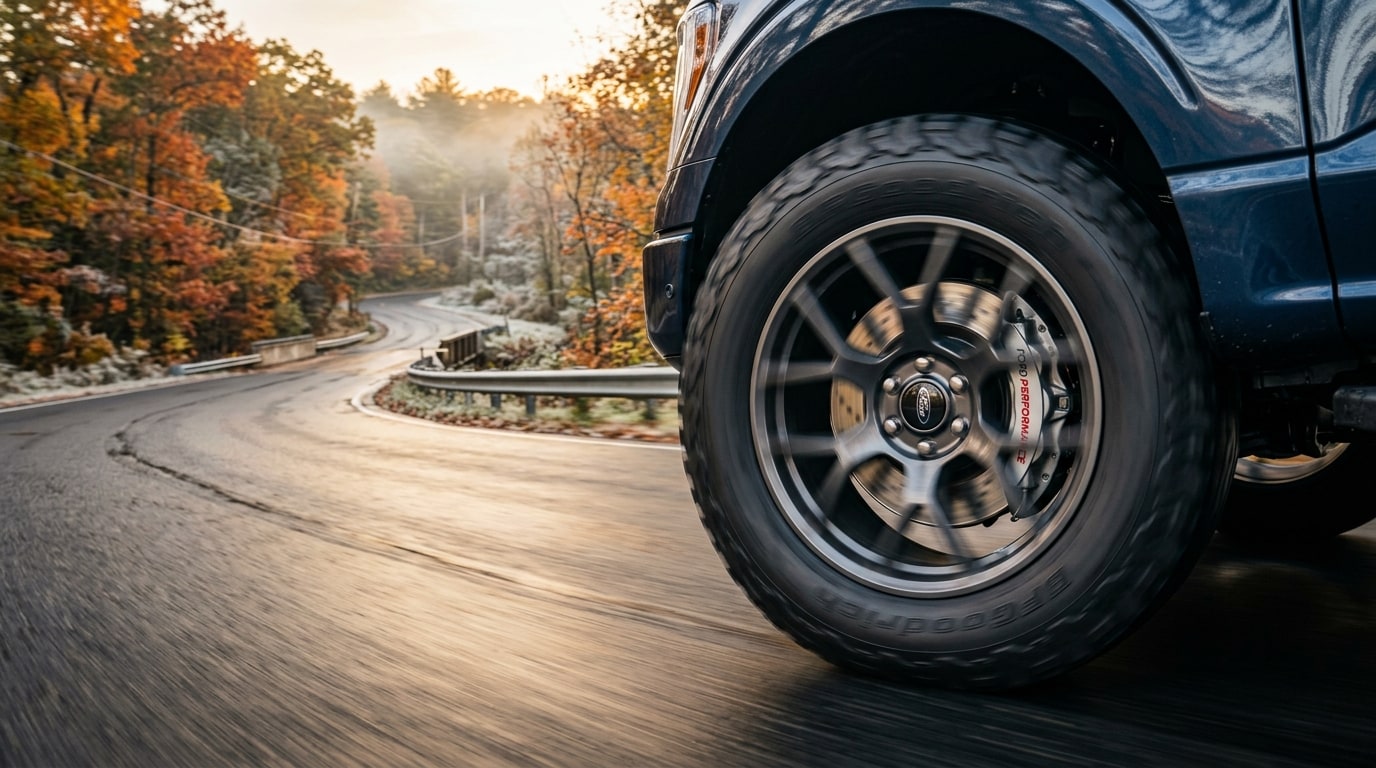
Maintaining Stopping Power in the 2026 Ford Lineup
The braking system on a modern vehicle serves as the primary safety mechanism for managing momentum, especially when navigating the diverse driving environments found throughout Massachusetts. Whether you are managing the heavy stop-and-go traffic through Framingham or heading out for a weekend at the Assabet River National Wildlife Refuge, your brake components must respond with precision. For the 2026 model year, Ford has integrated sophisticated electronic systems that work alongside traditional hydraulic hardware to ensure consistent stopping distances. Maintaining these systems requires a technical understanding of how different platforms, from the compact 2026 Ford Escape to the heavy-duty 2026 Ford F-150, distribute braking force.
Our team at Colonial Ford of Marlboro focuses on the specific thermal and chemical stresses that local roads place on these components. The frequent temperature swings and the use of road salt during winter months can lead to surface oxidation on rotors and the degradation of rubber seals within the calipers. When these parts lose their efficiency, the driver may notice a change in pedal travel or a decrease in initial bite. To ensure your vehicle remains within factory safety specifications, we provide comprehensive inspections that evaluate every part of the assembly. If you have questions about a specific noise or a change in your vehicle's braking behavior, you can reach our service department for a quick call to discuss the symptoms with a specialist.
The complexity of 2026 models means that a simple visual check of the pads is often insufficient. We utilize diagnostic tools to communicate with the Anti-lock Braking System (ABS) and electronic stability control modules to verify that the software is correctly managing brake pressure across all four wheels. This is particularly vital for owners of the 2026 Ford Explorer, where the 4WD system and heavy curb weight place significant demands on the front friction materials during downhill descents. For those who prefer to drop by for an in-person consultation, our Marlborough location is easily accessible for drivers throughout the MetroWest region.
Table of Contents
- Factory Maintenance Intervals for 2026 Ford Brake Systems
- Identifying Signs of Brake Wear and Component Fatigue
- Comparing Standard Pad Replacement and Full Brake Restoration
- Technical Requirements for Electronic Brake Service and Hybrid Systems
- Common Questions Regarding 2026 Ford Brake Maintenance
Factory Maintenance Intervals for 2026 Ford Brake Systems
Following the manufacturer's prescribed service schedule is the most effective way to prevent premature component failure and maintain the integrity of your New Vehicle Limited Warranty. For the 2026 Ford F-150, the official maintenance guide dictates a thorough brake system service every 30,000 miles. This milestone is critical because it includes the complete replacement of the brake fluid. Over time, brake fluid naturally absorbs moisture from the atmosphere, which can lower its boiling point and lead to internal corrosion within the master cylinder and ABS valves. By refreshing this fluid at the 30,000-mile mark, we protect the hydraulic integrity of the entire system.
While major services happen at longer intervals, routine inspections are recommended much more frequently. We suggest a professional brake evaluation at least every 15,000 miles, or during every scheduled oil change. For a 2026 Ford Escape, which often serves as a primary commuter vehicle, these regular check-ups allow our technicians to monitor the rate of wear on the friction linings. If you frequently use your vehicle for towing or carry heavy loads through the rolling terrain in Stow, you may find that your pads reach their service limit sooner than a vehicle used primarily for highway cruising. To stay ahead of these needs, you can easily schedule your next inspection online to find a time that fits your commute.
The 2026 Ford Explorer and other larger SUVs in the lineup typically require more frequent monitoring due to their higher mass. Our technicians look for specific wear patterns that indicate how the vehicle is being used, such as "tapered" wear on the pads which might suggest a sticking caliper pin. By catching these issues during a 10,000 or 15,000-mile inspection, we can often perform a simple cleaning and lubrication service that extends the life of the more expensive components. Adhering to these intervals ensures that the 5 years / 60,000 miles powertrain and roadside assistance coverage remains a secondary safety net rather than a necessity due to neglected maintenance.
Identifying Signs of Brake Wear and Component Fatigue
Recognizing the early warning signs of brake fatigue can prevent a minor maintenance item from escalating into a costly mechanical repair. One of the most common indicators is an audible high-pitched squeal, which is often caused by a small metal "wear indicator" tab on the brake pad making contact with the rotor. This is a deliberate design feature meant to alert the driver that the friction material has reached its minimum safe thickness. If this sound transitions into a heavy grinding or scraping noise, it typically signifies that the pad material is completely exhausted, and the metal backing plate is damaging the rotor surface.
Physical feedback through the vehicle's controls also provides vital clues about the health of the system. If you feel a distinct vibration or "pulsation" through the brake pedal or the steering wheel while slowing down, it often points to lateral runout or thickness variation in the rotors—commonly referred to as warped rotors. In a 2026 Ford F-150, this sensation can become more pronounced when the vehicle is under load or descending a grade. Additionally, if the vehicle pulls to one side during braking, it may indicate a collapsed brake hose or a seized caliper piston that is preventing even pressure distribution across the axle.
Changes in pedal feel should never be ignored by 2026 Ford owners. A "spongy" or soft pedal that travels closer to the floor than usual often suggests air has entered the hydraulic lines or that the brake fluid has severely degraded. Conversely, an unusually hard pedal that requires excessive foot pressure to stop the vehicle might indicate a failure in the brake vacuum booster or the electronic brake-boost system found in newer hybrid models. Monitoring the dashboard for the brake warning light or the ABS indicator is also essential, as these lights often trigger before physical symptoms become obvious to the driver.
Comparing Standard Pad Replacement and Full Brake Restoration
When it comes time for service, the distinction between a simple pad swap and a full brake restoration is a matter of both safety and longevity. A standard pad replacement is typically appropriate when the rotors are still well within their original thickness specifications and show no signs of heavy scoring, heat spots, or warping. During this process, our technicians replace the friction liners, inspect the hardware, and verify the fluid levels. This is often the most cost-effective route for a 2026 Ford Escape that has seen light duty and regular maintenance, ensuring the vehicle returns to its original stopping performance without unnecessary part replacement.
A full brake service, or restoration, is a more comprehensive approach that addresses the entire wheel-end assembly. This includes installing new pads and either resurfacing or replacing the rotors entirely. For the 2026 Ford Explorer, we often recommend rotor replacement if the existing units have been subjected to high-heat cycles that have altered the metallurgy of the steel. A full service also involves a Brake Hardware Kit, which replaces the clips, springs, and slide pin boots. Reusing old hardware can lead to "brake drag" or uneven wear, as weakened springs may fail to pull the pads away from the rotor once the pedal is released.
The choice between these two levels of service often depends on the measured data gathered during the inspection. We use precision micrometers to measure rotor thickness at multiple points to ensure they stay above the "discard" limit. If a rotor is thick enough but has minor surface irregularities, resurfacing—or "turning"—the rotor on a lathe can provide a fresh, flat mating surface for the new pads. However, for high-performance applications or heavy-duty use in a 2026 Ford F-150, installing new Motorcraft rotors is frequently the preferred method to ensure maximum heat dissipation and structural integrity over the next 30,000 to 50,000 miles.
Technical Requirements for Electronic Brake Service and Hybrid Systems
Modern Ford vehicles, particularly those equipped with hybrid powertrains or electronic parking brakes, require specialized procedures that go beyond traditional mechanical work. For instance, the 2026 Ford Escape Hybrid utilizes a regenerative braking system that captures kinetic energy to recharge the high-voltage battery. In these models, the hydraulic brakes often act as a secondary system during light deceleration, which can lead to different wear patterns than those seen on purely internal combustion vehicles. Because the mechanical pads are used less frequently, they are more susceptible to "glazing" or moisture-related corrosion, making regular professional cleaning and lubrication even more important.
Another technical hurdle for the 2026 model year is the widespread use of Electronic Parking Brakes (EPB). To service the rear brakes on these vehicles, a technician must use a diagnostic scan tool to electronically retract the caliper pistons into "Brake Service Mode." Attempting to manually compress these pistons without the proper software command can cause permanent damage to the internal electric motors and gear assemblies. Our facility is equipped with the latest Ford-authorized interfaces to safely manage these electronic systems, ensuring that every ST-Line or Platinum trim receives the precise calibration required for the EPB to function correctly after the new pads are installed.
Safety and precision are the cornerstones of our service philosophy, and using the correct parts is a non-negotiable part of that equation. We exclusively use Motorcraft components, which are engineered to match the specific friction coefficients and noise-reduction requirements of your vehicle's original design. Using aftermarket parts can sometimes lead to increased brake dust, unwanted noise, or compatibility issues with the vehicle's electronic stability sensors. To help maintain your vehicle's performance while managing ownership costs, we invite you to browse our current maintenance and parts specials before your next visit.
Common Questions Regarding 2026 Ford Brake Maintenance
Owners of the 2026 Ford lineup often have specific questions about how to best care for their braking systems in the MetroWest area. Whether you are dealing with the hilly terrain in Boxborough or the stop-and-go traffic on Route 9, understanding these nuances can help you make informed decisions about your vehicle's upkeep.
Q: Does the Ford warranty cover my brake pads if they wear out early?
Brake pads are generally categorized as "wear and tear" items. However, under the Ford New Vehicle Limited Warranty, brake pads are typically covered for defects in materials or workmanship for 12 months or 18,000 miles, whichever comes first. This provides peace of mind for new owners of the 2026 Ford F-150 or Explorer if they encounter premature wear shortly after taking delivery.
Q: Why do my brakes squeak in the morning even if the pads are new?
In our cold-winter climate, it is common for a thin layer of "flash rust" to form on the rotors overnight due to humidity or dew. This is especially prevalent in the salt-belt region. The first few stops of the morning will usually scrub this oxidation off, which may cause a temporary squeaking or grinding sound. If the noise persists after the brakes have warmed up, it warrants a professional inspection.
Q: Can I change the rear brakes on my 2026 Ford at home?
While some mechanical aspects remain the same, most 2026 models require a specific "Brake Service Mode" to be activated through the vehicle's computer system to retract the electronic parking brake. Without the ability to trigger this mode, you risk damaging the caliper. We recommend having this performed by factory-trained technicians who have the necessary diagnostic equipment to reset the system correctly.
Q: How does the "Tremor" or off-road trim affect brake wear?
Models like the 2026 Ford Explorer Tremor are designed for more rugged environments. Off-road driving often involves "trail braking" and the use of electronic traction management systems that apply individual brakes to control wheel spin. This can lead to faster wear than highway driving. If you frequently take your vehicle off the pavement, we recommend shortening your inspection intervals to every 5,000 to 7,500 miles.
Q: Is it necessary to replace rotors every time I get new pads?
It is not always mandatory, but it is often recommended. If the rotors are above the minimum thickness and have no structural defects, they can sometimes be resurfaced. However, for the 2026 Ford F-150, many owners choose to replace them to ensure the best possible heat management, especially when towing. Our team can provide a quick call to explain the measurements we found during your inspection. If you are ready to visit us, you can find our service center in Marlborough for a complete evaluation.
© 2026 Colonial Ford of Marlboro. All rights reserved.